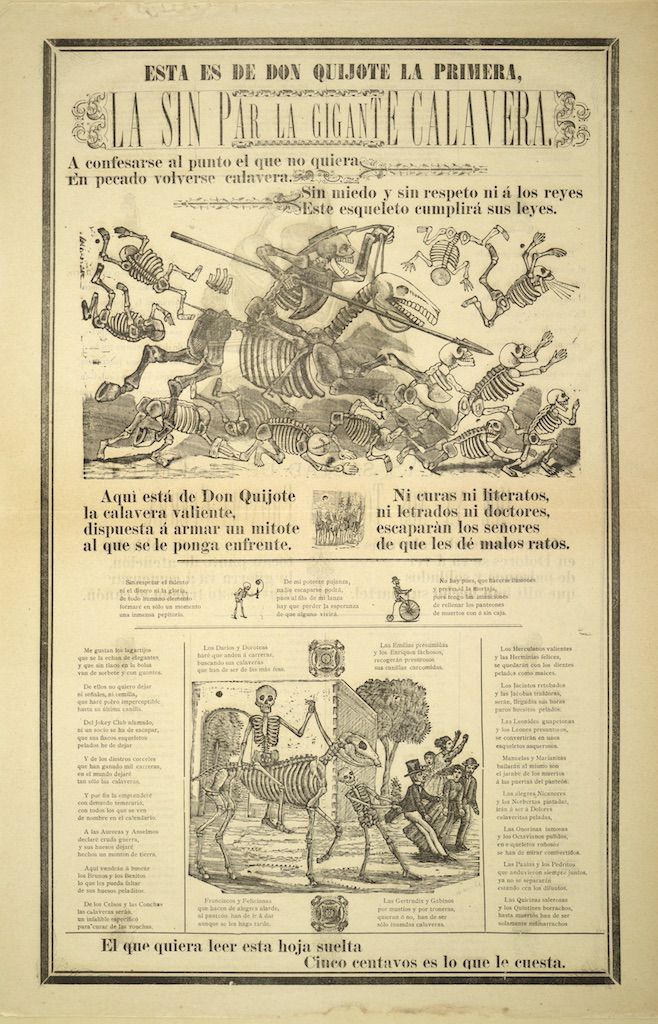
This is a vintage print or sheet, likely a broadside or chapbook cover, featuring a series of illustrations centered around skeletons and the theme of Don Quixote. The paper has a yellowed, aged appearance. **Top Section:** A large, chaotic illustration dominates the top half. It depicts a battle scene with numerous skeletons riding horses and engaging in combat. The skeletons are wielding swords, lances, and other weapons. The style is somewhat crude and expressive, with dynamic lines and a sense of movement. **Text:** Above the illustration, there's Spanish text in a decorative font. It reads: "ESTA ES DE DON QUIJOTE LA PRIMERA, LA SIN PAR LA GIGANTE CALAVERA" (This is the first of Don Quixote, the unparalleled giant skull). Below the illustration, there's more text: "A confesarse al punto el que no quiera en pecado volverse calavera" (Confess immediately if you don't want to become a skull in sin) and "Sin miedo y sin respeto ni a los reyes este esqueleto cumplirá sus leyes" (Without fear and without respect for kings, this skeleton will fulfill its laws). **Smaller Illustrations:** Below the main illustration, there are four smaller, rectangular illustrations, each with accompanying text. * **Top Left:** A skeleton standing with a sword, with text about Don Quixote being ready to face any challenge. * **Top Right:** A skeleton with text about neither doctors nor lawyers being able to save those with bad habits. * **Bottom Left:** A skeleton riding a donkey, with text about the skeleton's journey. * **Bottom Right:** A skeleton surrounded by rats, with text about the skeleton's power over rats. **Bottom Text:** At the very bottom, there's text that reads: "El que quiera leer esta hoja suelta" (Whoever wants to read this loose sheet) and "Cinco centavos es lo que le cuesta" (It costs five cents). The overall style is characteristic of popular prints from the 19th or early 20th century, often used for storytelling and entertainment. The use of skeletons adds a macabre and cautionary element to the theme of Don Quixote.