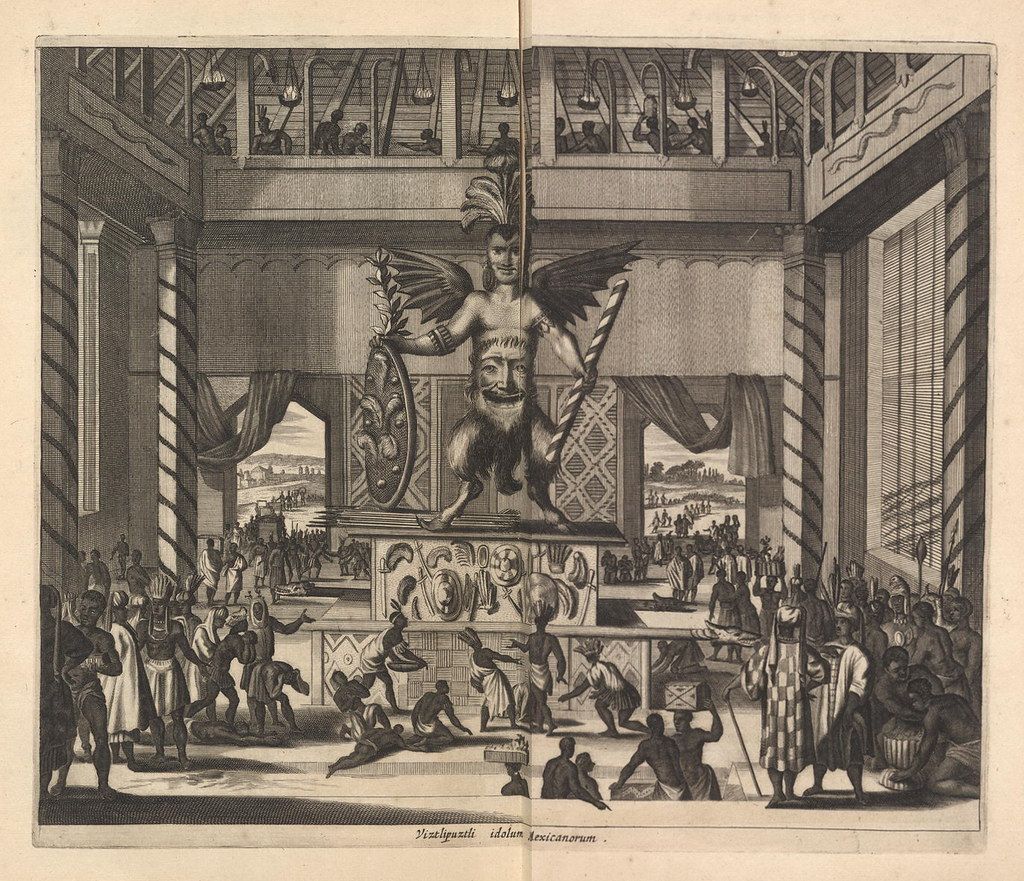
This is a detailed black and white engraving depicting a religious or ceremonial scene, likely from historical or anthropological context. The central focus is a large, imposing idol or deity figure, positioned on a raised platform. The idol has a human-like face with exaggerated features, adorned with a headdress and what appears to be a complex, ornate collar. It's surrounded by symbols and decorations, suggesting its importance in the ritual. Below the platform, numerous figures are engaged in various activities. Some are prostrate before the idol, seemingly worshipping or offering sacrifices. Others are depicted in dynamic poses, possibly performing a ritual dance or procession. The figures are dressed in traditional clothing, and their actions suggest a complex religious ceremony. The scene is set within a grand architectural structure. Tall columns support a decorated ceiling, and a series of stairs lead up to the platform where the idol stands. The background reveals a landscape with distant buildings and hills, suggesting an urban setting. The engraving is highly detailed, with intricate lines and shading used to create depth and texture. The composition is balanced, with the idol as the focal point and the surrounding figures and architecture contributing to the overall narrative. The text at the bottom reads 'Hizetliputli idolum Mexicanorum'.