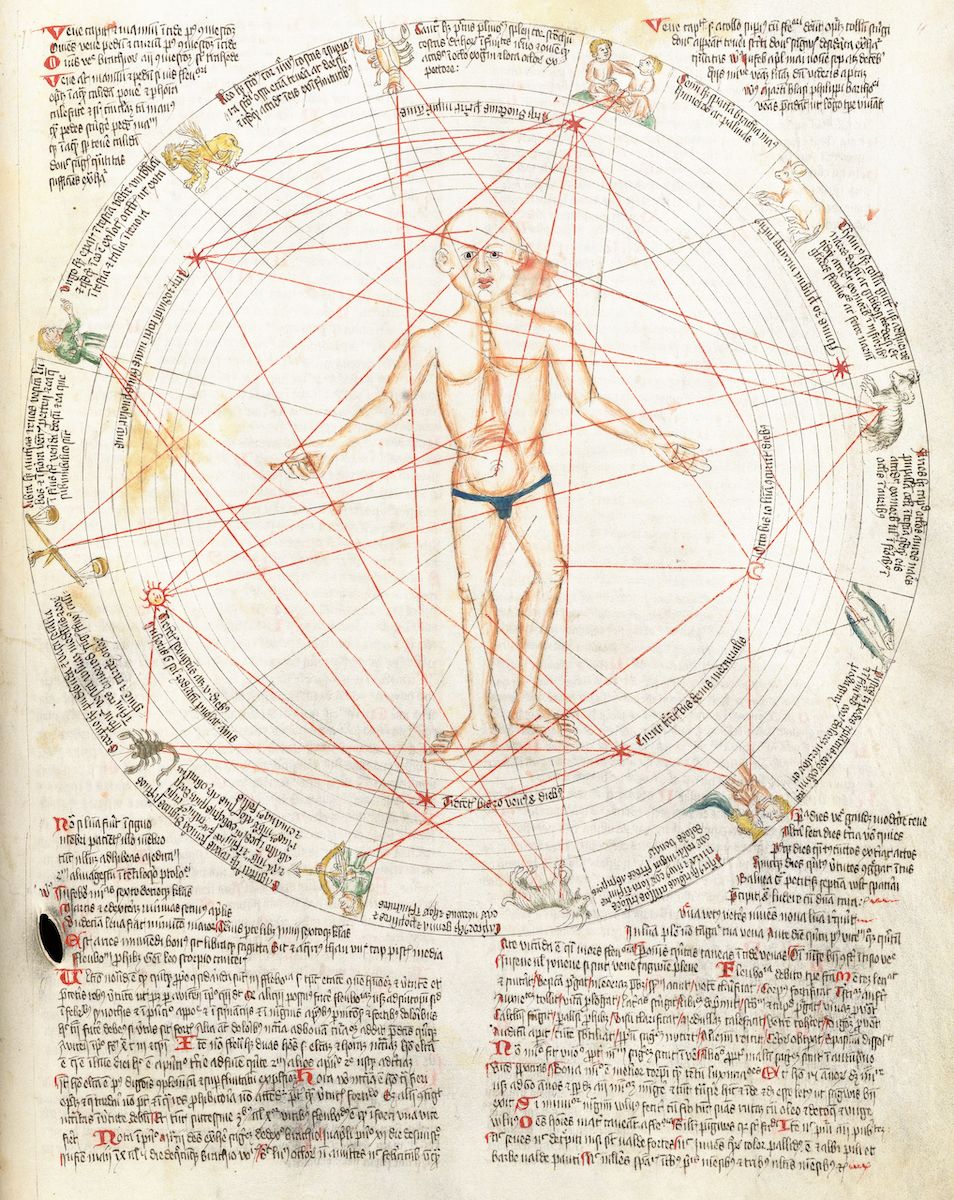
This is a detailed image of a page from a medieval manuscript, likely an astrolabe chart or astronomical diagram. The page is filled with intricate lines, circles, and handwritten text in Latin. **Central Design:** The core of the image features a complex network of intersecting lines and circular arcs. These lines appear to represent astronomical calculations or the projection of celestial bodies. There's a central point from which many of these lines radiate, suggesting a focus on a specific point in the sky or a method of measurement. **Text and Annotations:** The entire page is covered in dense, handwritten text. The script is characteristic of medieval manuscripts, with elaborate letterforms and abbreviations. The text is arranged in columns and around the central diagram, likely providing explanations, calculations, or instructions related to the astrolabe's use. **Illustrations:** Scattered throughout the page are small, hand-drawn illustrations. These depict figures, possibly representing zodiac signs or constellations, and other symbolic imagery. The illustrations are rendered in a simple, stylized manner, typical of medieval art. **Color Palette:** The color palette is limited to shades of brown, red, and blue. The parchment background is a warm, creamy color, while the ink used for the text and illustrations is a dark brown or black. Red ink is used to highlight certain lines or annotations. **Overall Impression:** The image conveys a sense of meticulous craftsmanship and intellectual curiosity. It is a testament to the advanced astronomical knowledge and artistic skills of medieval scholars. The complexity of the diagram and the density of the text suggest that this was a valuable and important tool for understanding the cosmos.