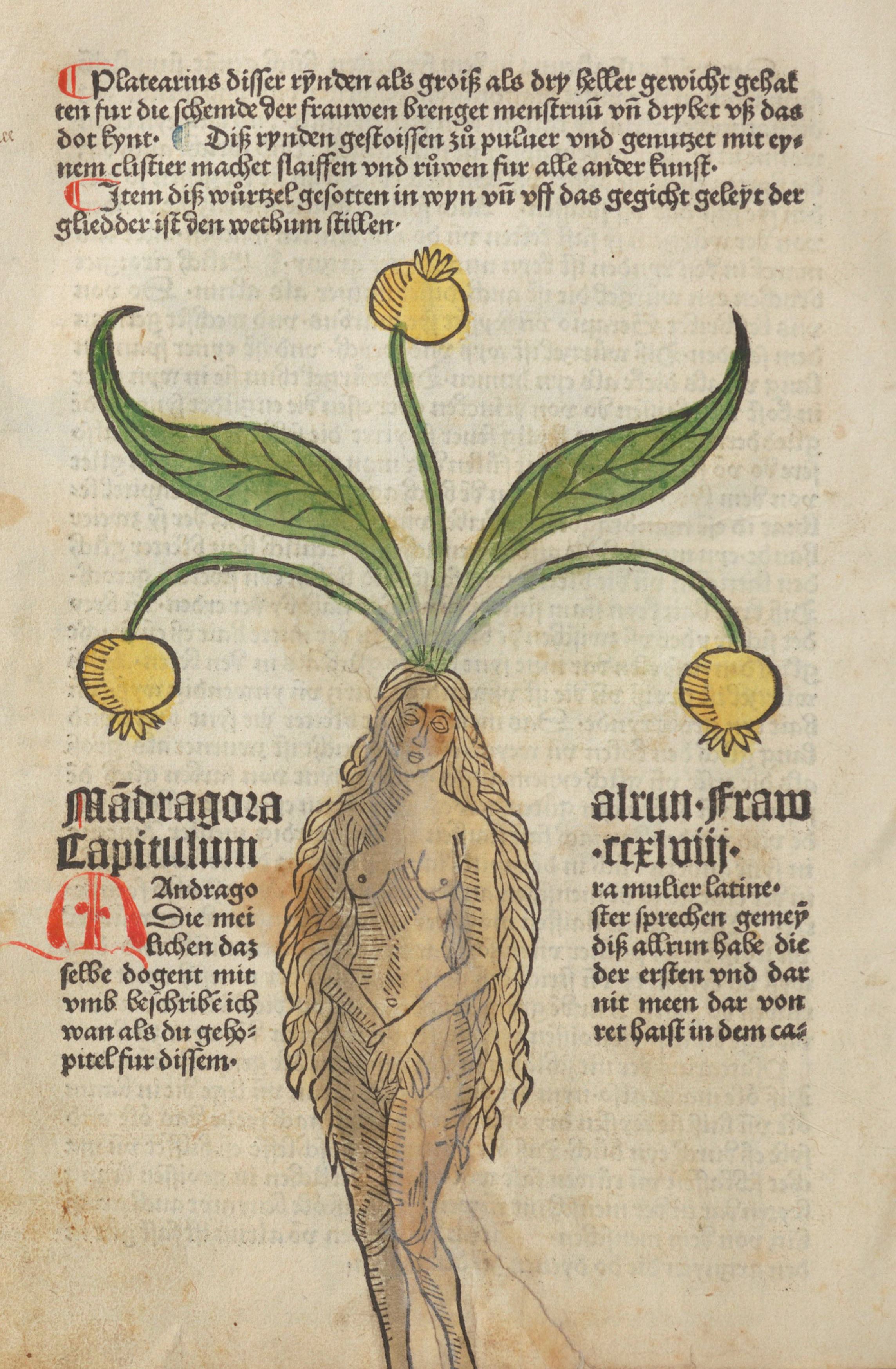
This is a woodcut illustration from a medieval herbal, likely a page from a book on medicinal plants. The central image depicts a human-like figure emerging from the roots of a plant, specifically a mandrake. The figure is nude and appears to be a young man or androgynous being. It's positioned in a somewhat contorted pose, with arms raised and legs bent. The body is slender and detailed, with attention given to musculature. The figure's hair is long and flowing, blending with the leaves of the plant. The plant itself has large, deeply lobed leaves that radiate outwards, framing the figure. A single flower with a bulbous shape sits atop a slender stem. The roots of the plant are prominent and intertwine around the figure's lower body. The illustration is surrounded by dense, Gothic-style text in German. There are two large, decorated initial letters on either side of the figure, one labeled 'Madaraga Capitulum' and the other 'alrun-Fram-rexlwij'. The text is arranged in columns and appears to be a description of the mandrake plant and its properties. The page has a slightly aged, yellowish tone, typical of old paper. The illustration is executed in a black and white woodcut style, with fine lines and shading to create depth and detail. The overall impression is one of a mystical and somewhat unsettling depiction of a plant believed to have magical and medicinal properties.