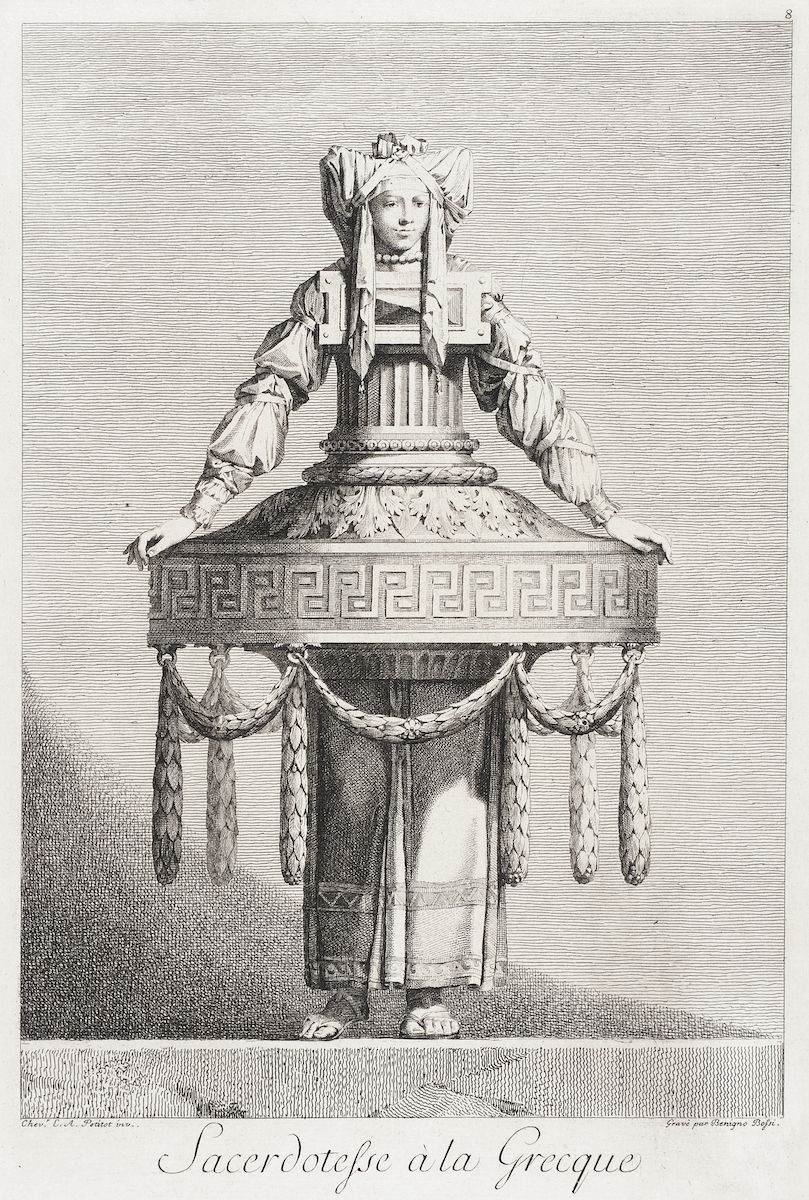
This is a black and white engraving depicting a figure dressed in elaborate, classical-style attire, likely a priestess or goddess. The figure is standing on a raised base and is surrounded by architectural elements. **Figure:** The figure appears to be a woman with a serene expression. She is wearing a complex garment that combines elements of a tunic and a robe, with flowing sleeves. Her head is adorned with a tall, ornate headdress or crown, possibly a variation of a polos. She is wearing a necklace or collar. Her hands are outstretched, as if in a gesture of offering or blessing. **Attire and Ornamentation:** The clothing is heavily draped and decorated with intricate patterns. The headdress is particularly elaborate, featuring a series of tiers and ornaments. The figure is also wearing a necklace or collar. **Architectural Elements:** The figure is positioned within a structure that resembles a miniature temple or shrine. This structure consists of a series of columns supporting a decorated entablature. The columns are adorned with a Greek key pattern. The entablature is decorated with floral motifs and other ornaments. The entire structure is raised on a base. **Overall Impression:** The engraving has a classical aesthetic, reminiscent of ancient Greek or Roman art. The figure and the surrounding architecture are rendered with a high degree of detail and precision. The overall impression is one of grandeur, solemnity, and religious devotion. **Inscription:** Below the image, there is an inscription in elegant cursive script that reads "Sacerdotesse a la Grecque" which translates to "Greek Priestesses" in French. The style of the engraving suggests it may be from the 18th or 19th century, possibly part of a series illustrating historical or mythological figures and costumes.