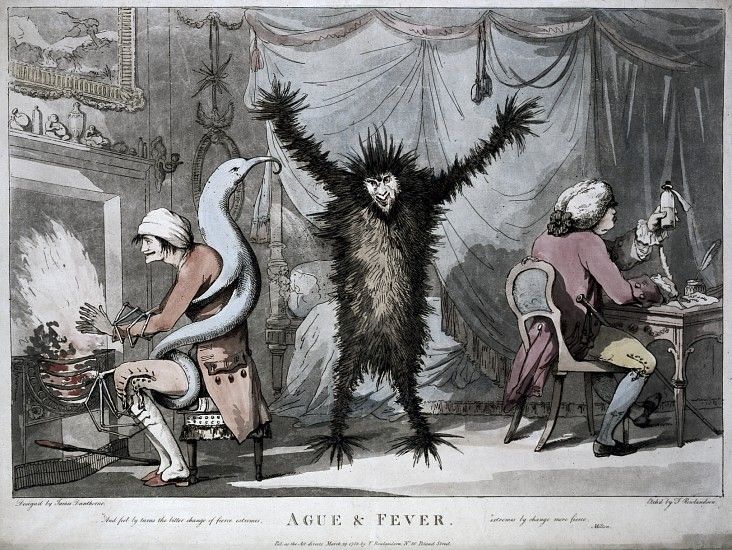
This is a hand-colored etching titled "Ague & Fever" by Thomas Rowlandson, published in London in 1796. It depicts a scene of illness and medical treatment in a well-appointed room. **Central Figure:** A large, monstrous ape-like creature stands in the center of the room with its arms outstretched. It appears to be a personification of the fever, with a wild, unkempt appearance. **Left Side:** A woman, dressed in a nightcap and gown, is being bled by a barber-surgeon. She is seated on a chair, and the barber-surgeon is applying a lancet to her arm. A basin is placed to collect the blood. A small table holds medical instruments and a pot. **Right Side:** A man, wearing a wig and formal attire, is seated at a writing desk, seemingly oblivious to the scene unfolding. He is writing with a pen and inkwell. **Setting:** The room is richly decorated with curtains, a fireplace, a mirror, and paintings on the wall. A rug covers the floor. The scene is meant to be satirical, highlighting the often ineffective and sometimes harmful medical practices of the time. The title suggests the contrast between the chills (ague) and fever, common symptoms of malaria and other illnesses. The ape-like figure represents the overwhelming and frightening nature of the fever itself.