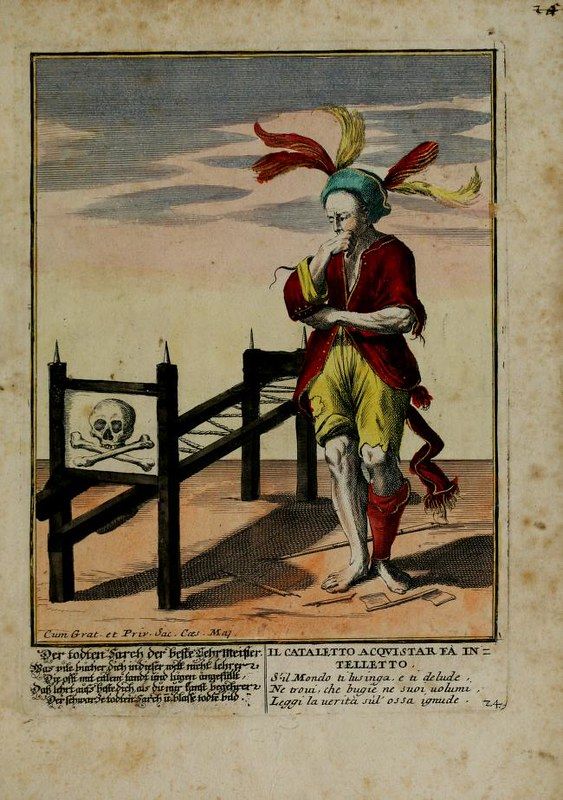
The image is a hand-colored etching from a broadside, likely from the 17th or 18th century. It depicts a man in a theatrical pose, seemingly performing or presenting something. **Central Figure:** The man is dressed in a flamboyant and somewhat grotesque costume. He wears a tall, blue hat adorned with red plumes. His clothing is a mix of colors and patterns – a blue coat with red cuffs and lapels, a yellow vest, and red stockings. He has one leg raised, as if in a dance or dramatic gesture. He is covering his mouth with his hand, as if whispering a secret or concealing something. **Background Element:** To the left of the man is a wooden structure resembling a small, open-sided booth or stage. On top of this structure is a skull and crossbones, a classic symbol of mortality and death. This adds a macabre and allegorical element to the scene. **Text:** Below the image is text in two languages, German and Italian. The German text is longer and appears to be a verse or poem. The Italian text is shorter and reads “Il Cataletto Acquistar fa Intelletto” which translates to “The little catalog makes one intelligent”. **Overall Impression:** The image is a curious blend of theatricality, allegory, and perhaps satire. The skull and crossbones suggest a theme of mortality or deception, while the man's pose and costume hint at performance or trickery. The text suggests that the image is related to a catalog or some form of information dissemination. The style of the etching is typical of the period, with fine lines and careful shading.