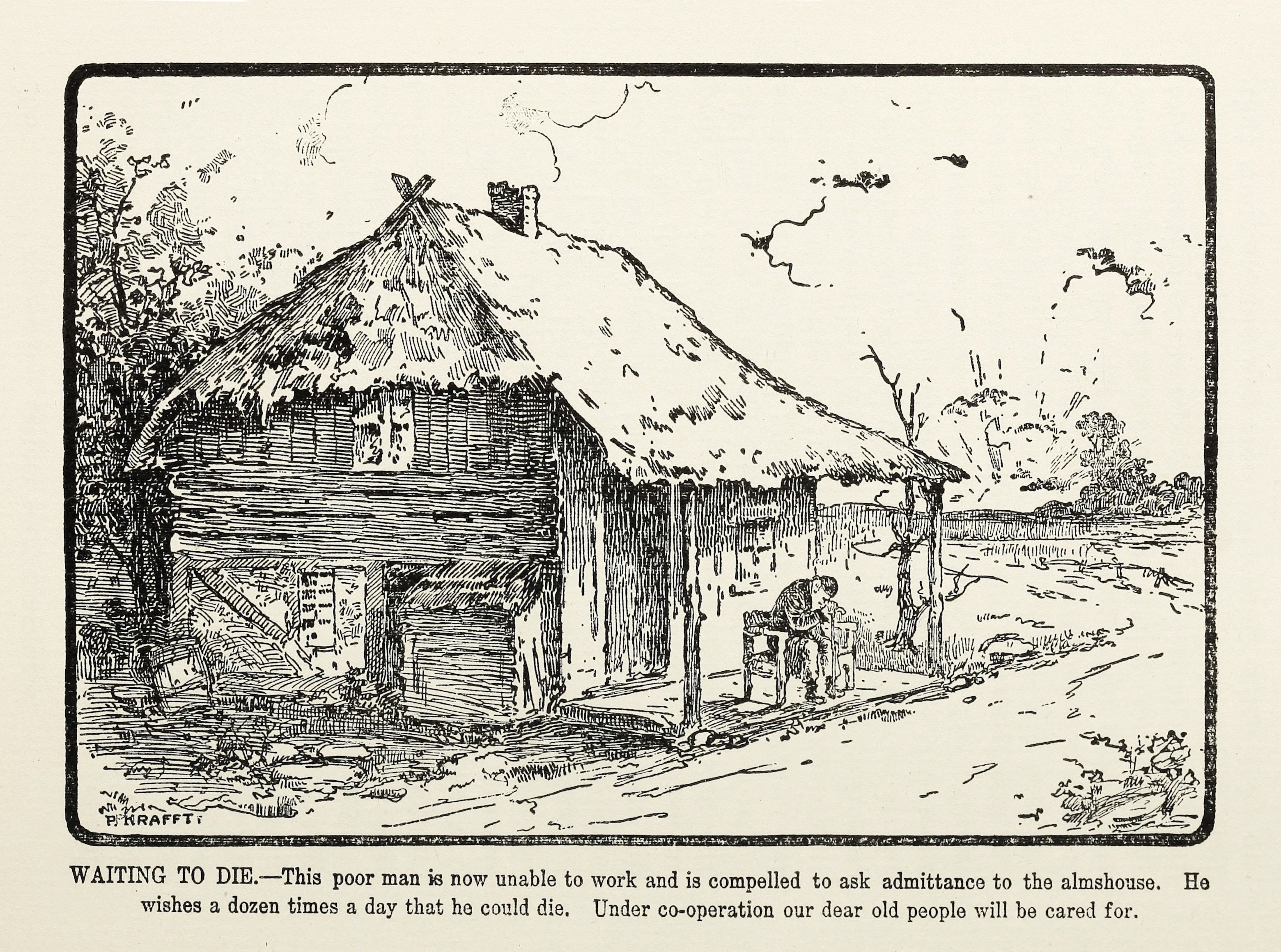
This is a black and white illustration depicting a scene of poverty and hardship. The central focus is a dilapidated, one-story building, likely an almshouse or poorhouse, with a steeply pitched, thatched roof. The building appears to be constructed of rough-hewn logs or planks, and its condition suggests neglect and disrepair. A single door is visible, and a small window is partially obscured by foliage. In front of the building, a man stands with his back turned, seemingly pleading or requesting something. He is dressed in simple clothing, and his posture conveys a sense of desperation. A second man stands near the building, possibly an attendant or official. The surrounding landscape is sparse and overgrown, with a few trees and bushes scattered around. A rudimentary fence encloses the property. The overall atmosphere is bleak and somber, reflecting the plight of the poor and vulnerable. The illustration is accompanied by text that reads, "WAITING TO DIE. - This poor man is now unable to work and is compelled to ask admittance to the almshouse. He wishes a dozen times a day that he could die. Under co-operation our dear old people will be cared for." The style of the illustration is reminiscent of 19th-century wood engravings or etchings, with detailed linework and a focus on capturing the emotional weight of the scene.