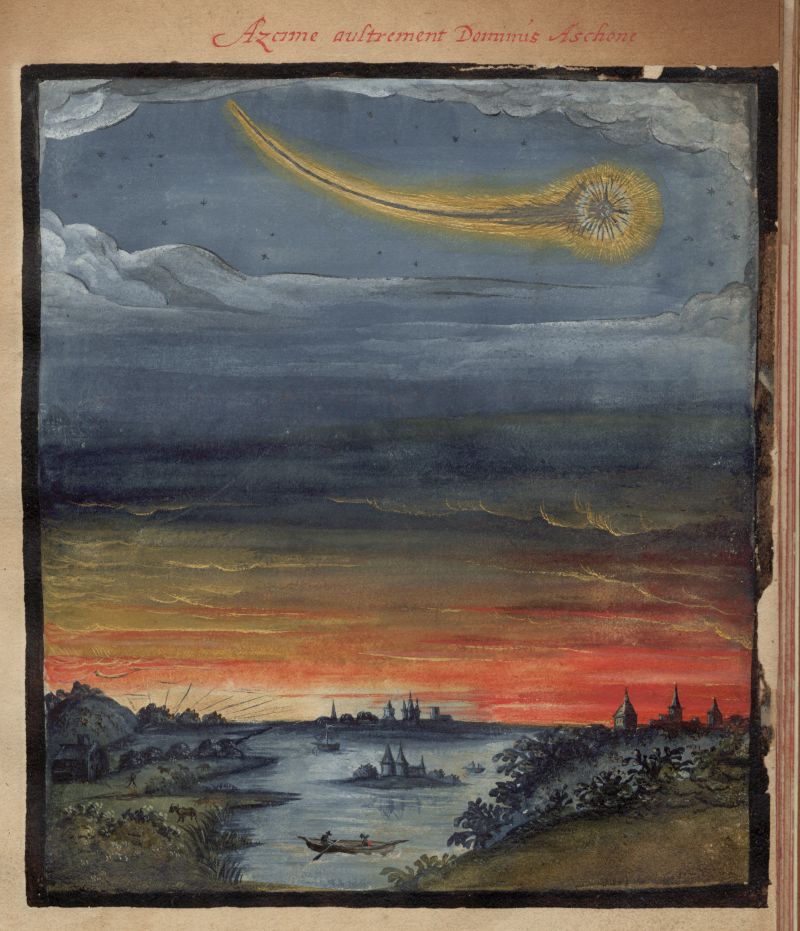
The image is a historical illustration or painting, likely from a book or manuscript, depicting a dramatic celestial event over a city. The composition is divided into distinct horizontal bands. **Top Band:** A dark, stormy sky filled with swirling, grey-blue clouds. A brilliant comet with a long, radiant tail streaks across the upper portion of the sky. The comet's head is a bright, golden yellow, and its tail fades into a lighter, ethereal glow. **Middle Band:** A band of dark, ominous clouds separates the comet from the city below. This creates a sense of foreboding and emphasizes the dramatic contrast between the celestial event and the earthly landscape. **Bottom Band:** A city is nestled along the water's edge. The buildings are rendered in detail, with towers, spires, and rooftops visible. A body of water, likely a river or harbor, stretches across the foreground. Several boats are visible on the water, and tiny figures of people can be seen near the shoreline. Hills and trees frame the city on either side, adding depth to the landscape. The sky in this band is a fiery orange and red, suggesting a sunset or the glow of the comet reflecting on the clouds. **Overall Impression:** The image is characterized by its dramatic lighting, rich colors, and detailed rendering of the landscape and celestial event. The composition is balanced and harmonious, and the overall effect is one of awe and wonder. The style is reminiscent of Renaissance or Baroque art, with a focus on realism and dramatic expression. **Text:** Above the image, there is handwritten text in a flowing script, likely in French, reading “Acome autrement Dominis Achon”.